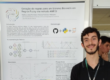
This January Letícia Nunes de Souza Andrade, a student in her second year of the undergraduate program at the Ilum School of Science, the undergraduate program offered by the Brazilian National Center for Research in Energy and Materials (CNPEM), participated in a scientific immersion in the laboratory of acclaimed researcher Monika Oberer at Austria’s University of Graz. During a period spanning just over three weeks, she was part of activities in the research group dedicated to structural biology and proteins, particularly processes linked to metabolism.

Letícia, who is from São Paulo, pursued this opportunity on her own; her interests in the area of metabolism and lipolysis research led her to contact Oberer after learning about her group’s work on TGL, a protein associated with this metabolic process. The lab’s open welcoming response allowed her to get a firsthand look at scientific routine and participate in the group’s activities.
“I made it clear I was just starting as an undergraduate and my main goal was to learn. They were very receptive and included me in the lab activities, explaining processes and allowing me to follow the experiments,” she explained. Letícia highlighted the contact with protein crystallization techniques and in-depth study of metabolic pathways as notable learning experiences, topics that are in line with her interests in biochemistry and bioscience.
The internship also included exchanging knowledge with the research group. During one lab meeting she suggested using Python to conduct a data analysis that the team was debating. “The idea came from a programming class I took at Ilum. I suggested trying to resolve the problem through computation, using Python, and they really liked the idea. It was great because not only did I learn a lot from them, I was also able to contribute a bit of what I learned at Ilum,” she said.
In Letícia’s view, the multidisciplinary course offered at the Ilum School of Science was essential for her to make the most of her international experience. She noted that the theoretical foundation and contact with different knowledge areas facilitate understanding of scientific discussions in research environments. “Ilum offers very strong theoretical underpinnings and integration between areas. This makes a difference when we get to the lab and need to understand what is happening there,” she added.
Ilum also provided institutional support to make the internship possible, assisting in the official processes to allow her to be present in the laboratory, including bureaucratic requirements from the Austrian university.
Her experience only reinforced her interest in pursuing a career in science, and expanded her possibilities for international collaboration in the future. At the end of her visit, Letícia spoke with Monika Oberer about the possibility of maintaining contact for future projects after concluding her undergraduate degree.
“I intend to do my master’s degree in Brazil because Brazilian science is very strong, but I also would like to have international experiences. Getting to know different laboratories and ways of working is very helpful in scientific training,” she noted.
About the Ilum School of Science
Ilum offers a free undergraduate degree program that utilizes an interdisciplinary approach to train scientists and professionals in science and technology. With an innovative educational model, the three-year full-time bachelor program offers courses that connect life sciences, materials science, data science, artificial intelligence, and the humanities in order to prepare researchers to work in an ethical and collaborative manner in the search for solutions to the global challenges of the twenty-first century. The Ilum School of Science is funded by the Brazilian Ministry of Education (MEC) and is part of the Brazilian Center for Research in Energy and Materials (CNPEM) in Campinas, São Paulo, a social organization overseen by the Ministry of Science, Technology, and Innovation (MCTI). Ilum's educational mission offers early contact with experimental activities, in teaching labs at the school as well as at CNPEM, in projects carried out together with researchers.
About CNPEM
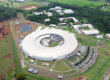
The Brazilian Center for Research in Energy and Materials (CNPEM) is home to a state-of-the-art, multi-user and multidisciplinary scientific environment and works on different fronts within the Brazilian National System for Science, Technology and Innovation. A social organization overseen by the Ministry of Science, Technology and Innovation (MCTI), with the involvement of the Ministry of Education and the Ministry of Health, CNPEM is driven by research that impacts the areas of health, energy, renewable materials, and sustainability. It is responsible for Sirius, the largest assembly of scientific equipment constructed in the country, and is currently constructing Project Orion, a laboratory complex for advanced pathogen research. Highly specialized science and engineering teams, sophisticated infrastructure open to the scientific community, strategic lines of investigation, innovative projects involving the productive sector, and training for researchers and students are the pillars of this institution that is unique in Brazil and able to serve as a bridge between knowledge and innovation. CNPEM's research and development activities are carried out through its four National Laboratories: Synchrotron Light (LNLS), Biosciences (LNBio), Nanotechnology (LNNano), Biorenewables (LNBR), as well as its Technology Unit (DAT) and the Ilum School of Science — an undergraduate program in Science and Technology.