Federal investments including the New Growth Acceleration Plan will intensify research in areas including health, energy, agriculture, the environment and new materials
This Monday, Brazilian President Luiz Inácio Lula da Silva led the groundbreaking ceremony for the National Program for Radical Innovation in Health’s first center at CNPEM (the Brazilian Center for Research in Energy and Materials) in Campinas, São Paulo. He also participated in the delivery of four new beamlines from the Sirius particle accelerator.

O presidente Lula acompanhou a inauguração de quatro novas linhas de luz síncrotron do acelerador de partículas Sirius. Elas ampliarão a capacidade brasileira de pesquisa em áreas como saúde, energia, agricultura, clima, nanotecnologia e novos materiais. Foto: Ricardo Stuckert / PR
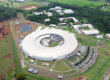
Lula, as the president is known, visited the facilities and active research projects at Sirius, Brazil’s fourth-generation scientific infrastructure that serves as a “super-microscope” capable of analyzing materials at the atomic and molecular scales. This equipment serves researchers from Brazil and abroad working in areas that include health, energy, agriculture, the environment, new materials and oil and gas. Sirius is one of the three most advanced synchrotron light sources in the world.
“When presented with projects that are very important for whatever area, we always say ‘We don’t have money’ or ‘It’s very expensive.’ We never ask ourselves: How much will it cost to not do it? For this reason, whatever millions we spend is very small compared to the millions that this will produce for the future of the country and the future of Brazilian society,” said President Lula during the inauguration of the four new Sirius beamlines.
He stressed the need to train specialized staff in centers like CNPEM for the country’s development. “This project can boost respect for Brazil around the globe, so nobody in the world thinks Brazil is inferior. We need to train many more researchers, many more mathematicians, many more engineers, many more people specialized in artificial intelligence. We need to make Brazil more autonomous globally so we can defend our national sovereignty with pride.”
National Program for Radical Innovation in Health
The event marked the launch of the first center for the National Program for Radical Innovation in Health, a federal initiative to bolster the country’s sovereignty in technology and health. The objective is to transform scientific knowledge into productive capacity and technological development for Brazil, focusing on strategic solutions to meet the demands of the national public health system (SUS).
CNPEM will be the program’s first anchor center, combining competencies in biotechnology, artificial intelligence, genomics, biofabrication and development of medical devices and advanced diagnostics. The program involves integrating the government, scientific institutions, productive sector, startups and advanced technological infrastructure to accelerate national innovation in health.
The model will combine a health innovation pipeline to transform priority challenges to the public health system into high-impact technological projects together with shared technological infrastructure to support testing, prototyping, productive scaling, and regulatory validation of strategic solutions.
During the ceremony, the president and CNPEM’s director general placed the cornerstone of the building that will host a multi-user infrastructure dedicated to health innovation, with advanced platforms for the development of active pharmaceutical ingredients (API), biotechnology, diagnostics and artificial intelligence applied to health and the bioeconomy. The complex will feature specialized laboratories, automated biofoundries, high-throughput screening platforms, and environments for regulatory development and industrial scaling.
New beamlines
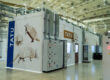
The president visited the Sapucaia, Quati, Sapê and Tatu beamlines, the newest research stations at Sirius. These new facilities expand the capacity of the accelerator and reinforce Brazil’s active role in science, technology and innovation.
One highlight is Sapucaia, which focuses on studies involving nanoparticles, proteins, polymers, catalysts, medications, human fluids and therapies, as well as research conducted as part of scientific partnerships between Brazil and China. Quati, in turn, will permit advanced research into materials for industry, rare earths and critical minerals.
Research on the Sapê beamline will influence the development of advanced materials and superconductors, with future applications in energy, health and infrastructure. The first beamline in the second phase of the Sirius project, Tatu, is funded by the federal government’s New Growth Acceleration Program (PAC) and will be the first fourth-generation synchrotron light source to operate in the terahertz range.
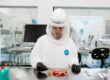
President Lula also was updated on the status of Project Orion, a laboratory complex for advanced pathogen research which will include Latin America’s first maximum biological containment (BSL-4) facilities and the only labs of this kind in the world connected to a synchrotron light source. The project will strengthen national capacity in the development of new diagnostic methods, vaccines, treatments and epidemiological strategies, expanding Brazilian sovereignty in addressing future health crises.
“CNPEM and Sirius are the result of collective efforts that span decades, governments, institutions and generations. This involves many people who have always dreamed of a country that can be on the cutting edge, a sovereign country, a country that trains people and believes that it can build things like this,” said CNPEM Director General Antonio José Roque da Silva.
He thanked everyone who participated in the CNPEM projects, including the workers who took a photo with President Lula at the beginning of the event. “This is a project carried out by researchers, engineers, technicians, students, public and private managers, construction workers and domestic companies who decided to believe that Brazil could indeed build world-class scientific infrastructure.”
About CNPEM
The Brazilian Center for Research in Energy and Materials (CNPEM) is home to a state-of-the-art, multi-user and multidisciplinary scientific environment and works on different fronts within the Brazilian National System for Science, Technology and Innovation. A social organization overseen by the Ministry of Science, Technology and Innovation (MCTI), with the involvement of the Ministry of Education and the Ministry of Health, CNPEM is driven by research that impacts the areas of health, energy, renewable materials, and sustainability. It is responsible for Sirius, the largest assembly of scientific equipment constructed in the country, and is currently constructing Project Orion, a laboratory complex for advanced pathogen research. Highly specialized science and engineering teams, sophisticated infrastructure open to the scientific community, strategic lines of investigation, innovative projects involving the productive sector, and training for researchers and students are the pillars of this institution that is unique in Brazil and able to serve as a bridge between knowledge and innovation. CNPEM's research and development activities are carried out through its four National Laboratories: Synchrotron Light (LNLS), Biosciences (LNBio), Nanotechnology (LNNano), Biorenewables (LNBR), as well as its Technology Unit (DAT) and the Ilum School of Science — an undergraduate program in Science and Technology.