Event will take place at UN headquarters in New York and be broadcast live online
Antônio José Roque da Silva, Director General of the Brazilian Center for Research in Energy and Materials (CNPEM), will participate in the 2026 Multi-Stakeholder Forum on Science, Technology and Innovation on May 7. This initiative by the United Nations will gather global leaders to discuss how science, technology and innovation can help to more swiftly achieve the Sustainable Development Goals. The event will be held at UN Headquarters in New York City.

José Roque, as the director is known, was invited to serve as a panelist in a session on scaling affordable, reliable and clean energy technologies with a special focus on developing countries. He will emphasize the importance of adapting these technologies to different contexts and ensuring sustainable long-term operations of energy systems, and also discuss the role of large scientific infrastructures in validating solutions and reducing risk prior to large-scale application.
The discussion will bring together specialists from different countries and international organizations in order to address challenges and opportunities in the energy transition, including public policies, funding models, and strategies to ensure that this process takes place in an inclusive manner that does not further expand inequalities.
The event will be streamed online at:
https://sdgs.un.org/events/session-2-powering-sustainable-development-through-clean-energy-technologies-affordable
About CNPEM
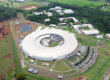
The Brazilian Center for Research in Energy and Materials (CNPEM) is home to a state-of-the-art, multi-user and multidisciplinary scientific environment and works on different fronts within the Brazilian National System for Science, Technology and Innovation. A social organization overseen by the Ministry of Science, Technology and Innovation (MCTI), with the involvement of the Ministry of Education and the Ministry of Health, CNPEM is driven by research that impacts the areas of health, energy, renewable materials, and sustainability. It is responsible for Sirius, the largest assembly of scientific equipment constructed in the country, and is currently constructing Project Orion, a laboratory complex for advanced pathogen research. Highly specialized science and engineering teams, sophisticated infrastructure open to the scientific community, strategic lines of investigation, innovative projects involving the productive sector, and training for researchers and students are the pillars of this institution that is unique in Brazil and able to serve as a bridge between knowledge and innovation. CNPEM's research and development activities are carried out through its four National Laboratories: Synchrotron Light (LNLS), Biosciences (LNBio), Nanotechnology (LNNano), Biorenewables (LNBR), as well as its Technology Unit (DAT) and the Ilum School of Science — an undergraduate program in Science and Technology.