Eighth edition of the event enjoyed strong participation by students, teachers, families and researchers
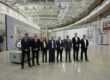
The Brazilian Center for Research in Energy and Materials (CNPEM) held yet another edition of Ciência Aberta, one of the country’s largest scientific dissemination events. With the participation of around 30,000 people and a strong showing by students, teachers, families and researchers, this open house firmly establishes the Center as a leading national and international reference in bringing science and society closer together.

On Friday (29), the day dedicated to students, Ciência Aberta welcomed 284 school groups from 10 different Brazilian states and the Federal District, reinforcing the national scope of the event and its strategic role in popularizing science. Tickets for school groups ran out in less than 24 hours during the registration period in March. Even a school in Paraguay participated in this edition.
Most groups came from the state of São Paulo, with 252 groups traveling to CNPEM, followed by Minas Gerais with 21. The cities with the most registered groups were Campinas (33), São Paulo (24), Hortolândia (12), Paulínia and Sorocaba (10 each), as well as Sumaré (9), Poços de Caldas (8) and Piracicaba (7).
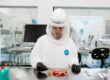
The strong presence of public schools and high school students highlighted growing interest among young people in science, technology and innovation, as thousands of students got a close look at some of the world’s most advanced scientific infrastructures like Sirius and the future Orion complex.
During the two days of programming, 30,000 people participated in roughly 100 interactive activities. Along with the scientific program, these visitors donated 5.1 tons of food to be directed toward charitable institutions, and received 1,200 plant seedlings.
This was the first time that visitors needed to obtain tickets in advance, and all were sold out prior to the event.
“Ciência Aberta is more than just a celebration of CNPEM’s work. It is a way of recognizing the collective efforts of people who believe that Brazil can go further. Each advance presented to the public carries with it the silent work of generations that believed in knowledge, cooperation and in the future. After all, science is a collective human effort built on persistence, trust and long-term vision, and for this reason it must be valued, disseminated and recognized by all of society. This is how we inspire new talent, strengthen our institutions and proudly reaffirm the role of Brazilian science in constructing a better future,” said CNPEM Director General Antonio José Roque da Silva.
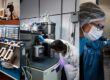
In addition to hands-on activities in the laboratories, the program also included Sede de Ciência [“A Thirst for Science”], a space dedicated to debates and conversations between researchers and visitors. The topics included scientific dissemination, artificial intelligence in education, quantum technologies, Amazonian biodiversity, fossils analyzed using the Sirius accelerator, rare earths and the challenges of health innovation in Brazil.
Ciência Aberta 2026 was supported by SABIS International School, the Brazilian Society for the Advancement of Science (SBPC), and the Municipality of Campinas.
About CNPEM
The Brazilian Center for Research in Energy and Materials (CNPEM) is home to a state-of-the-art, multi-user and multidisciplinary scientific environment and works on different fronts within the Brazilian National System for Science, Technology and Innovation. A social organization overseen by the Ministry of Science, Technology and Innovation (MCTI), with the involvement of the Ministry of Education and the Ministry of Health, CNPEM is driven by research that impacts the areas of health, energy, renewable materials, and sustainability. It is responsible for Sirius, the largest assembly of scientific equipment constructed in the country, and is currently constructing Project Orion, a laboratory complex for advanced pathogen research. Highly specialized science and engineering teams, sophisticated infrastructure open to the scientific community, strategic lines of investigation, innovative projects involving the productive sector, and training for researchers and students are the pillars of this institution that is unique in Brazil and able to serve as a bridge between knowledge and innovation. CNPEM's research and development activities are carried out through its four National Laboratories: Synchrotron Light (LNLS), Biosciences (LNBio), Nanotechnology (LNNano), Biorenewables (LNBR), as well as its Technology Unit (DAT) and the Ilum School of Science — an undergraduate program in Science and Technology.