The Director of LNBio was appointed during the meeting of the Center’s Board of Governors, held this past May in Cape Town, South Africa.

Maria Augusta Arruda – Image: Courtesy of Thermo Fisher
The Director of the National Biosciences Laboratory (LNBio/CNPEM), Maria Augusta Arruda, has been elected to the Council of Scientific Advisers (CSA) of the International Centre for Genetic Engineering and Biotechnology (ICGEB), a leading international organization dedicated to advancing biotechnology and life sciences.
The appointment was confirmed during the ICGEB Board of Governors meeting held in May in Cape Town, South Africa. The event brought together representatives from approximately 70 countries to discuss scientific cooperation, health innovation, food security, and sustainable development.
Aligned with the United Nations system, the ICGEB works to strengthen scientific and technological capacities through research excellence, researcher training, and technology transfer. It operates laboratories in Italy, India, and South Africa, alongside an extensive international network.
“I am deeply honored and fully aware of the responsibility that comes with joining the ICGEB’s CSA. It is an opportunity to contribute to a multilateral organization dedicated to strengthening biotechnology and scientific cooperation for the benefit of diverse countries and regions,” says Maria Augusta.
For the LNBio Director, serving on the council also amplifies the presence of Brazilian science in strategic global discussions. “Bringing the perspective of Brazilian science—characterized by excellence, creativity, and public commitment—into this international arena is particularly meaningful, especially on topics such as biodiversity, health innovation, and sustainable development,” she highlights.
About Maria Augusta Arruda
At the helm of CNPEM’s National Biosciences Laboratory since 2023, Maria Augusta Arruda has nearly three decades of experience in research and scientific cooperation both in Brazil and abroad. She was previously a researcher at Fiocruz, a professor at UERJ, and led international initiatives such as the drug discovery partnership between Brazil and the University of Nottingham. At Nottingham, she also held strategic positions focused on engaging with the UK’s science and innovation system and researcher development. At CNPEM, her leadership has reinforced agendas integrating biosciences, health, biodiversity, and innovation, with a strong focus on transdisciplinary research and international collaboration.
About CNPEM
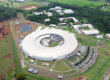
The Brazilian Center for Research in Energy and Materials (CNPEM) is home to a state-of-the-art, multi-user and multidisciplinary scientific environment and works on different fronts within the Brazilian National System for Science, Technology and Innovation. A social organization overseen by the Ministry of Science, Technology and Innovation (MCTI), with the involvement of the Ministry of Education and the Ministry of Health, CNPEM is driven by research that impacts the areas of health, energy, renewable materials, and sustainability. It is responsible for Sirius, the largest assembly of scientific equipment constructed in the country, and is currently constructing Project Orion, a laboratory complex for advanced pathogen research. Highly specialized science and engineering teams, sophisticated infrastructure open to the scientific community, strategic lines of investigation, innovative projects involving the productive sector, and training for researchers and students are the pillars of this institution that is unique in Brazil and able to serve as a bridge between knowledge and innovation. CNPEM's research and development activities are carried out through its four National Laboratories: Synchrotron Light (LNLS), Biosciences (LNBio), Nanotechnology (LNNano), Biorenewables (LNBR), as well as its Technology Unit (DAT) and the Ilum School of Science — an undergraduate program in Science and Technology.