The initiative is funded with a R$60 million investment from the Ministry of Health and aims for technological autonomy, strengthening SUS, and reducing dependence on imported inputs
The Brazilian Center for Research in Energy and Materials (CNPEM) was selected by the Brazilian Company for Industrial Research and Innovation (Embrapii) to host a new Competence Center aimed at developing Active Pharmaceutical Ingredients (CC IFA-BIOBR) from Brazilian biodiversity. The initiative will receive an investment of R$60 million from the Ministry of Health and aims to expand the national capacity to develop innovative medicines, strengthen the Brazilian Unified Health System (SUS), and reduce dependence on imports in a strategic sector for the country.
The Center arrives at a moment considered decisive for the sector. According to a study by BNDES on the Brazilian Health Economic-Industrial Complex (CEIS), 90% of the Active Pharmaceutical Ingredients (APIs) used by the national pharmaceutical industry are imported. In some sectors, this dependence reaches 95%, making the country vulnerable to international crises, exchange rate fluctuations, and disruptions in global supply chains, according to the Brazilian Association of Pharmaceutical Input Industries (Abiquifi). By investing in research and development of APIs from Brazilian biodiversity, the new Competence Center will contribute to strengthening the CEIS, expanding national technological autonomy, and bringing technologies developed in the country to the SUS.
The development of research is planned to transform natural assets found in Brazil’s various biomes into new medicines, particularly for the treatment of neglected diseases and health conditions with a high incidence in the country.
The CC-IFABIOBR will allow the research and development of new technological routes for the production of these substances responsible for the therapeutic effect of medicines. CNPEM, a legal entity supervised by the Ministry of Science, Technology and Innovation (MCTI), becomes part of the network of 11 other Embrapii Competence Centers focused on the development of frontier technologies.
According to the Minister of Health, Alexandre Padilha, the Center is part of a commitment to increase Brazil’s capacity to produce technology, jobs, and income in the country, and it aligns with important milestones such as the resumption of insulin production in Brazil after 20 years, and the production of the first 100% Brazilian-made tacrolimus API. “Brazil is now part of a select club, one of the few countries in the world that produces pharmaceutical inputs, consolidating this effort toward national sovereignty. The CC-IFABIOBR enables new scientific discoveries made within the country to be transformed into medicines. All of this from our natural heritage, which also needs to be transformed into knowledge, innovation, and health for the population, with a focus on the needs of the SUS.”
The Secretary of Science, Technology and Innovation in Health (SCTIE), Fernanda De Negri, emphasizes that this is yet another partnership with CNPEM, the anchor center of the Brazilian Program for Radical Innovation in Health , which finances the installation of a research and development laboratory dedicated to the strategic needs of the health production sector, focusing on the pharmaceutical industry. “The industry has already made strides with generic drugs, and then it began to make incremental innovation. We have the conditions to take a step towards more radical innovation, seeking to develop new molecules in Brazil. And this involves instruments that encourage the national industry, whether public or private, to develop new medicines”, she says.
Embrapii’s president, Alvaro Prata, assesses that, in addition to strengthening national capacity to develop strategic inputs, the new Competence Center will train qualified professionals and bring science and industry closer together so that new medicines reach the population more quickly. “It is an investment that generates knowledge, competitiveness, and technological sovereignty for Brazil.”
According to the Director-General of CNPEM, Antonio José Roque da Silva, the innovation process requires the articulation of diverse skills and the construction of collaborative environments capable of connecting science, technology, the productive sector, and public policies. “In this context, the Competence Center, based at CNPEM, was conceived to act as an integration hub for researchers, companies, and institutions, accelerating the development of APIs derived from Brazilian biodiversity.”
What the industry says
By bringing science and industry closer together, the initiative should speed up the emergence of new technology-based businesses, generate skilled jobs, attract investment, increase the competitiveness of the national pharmaceutical sector, and strengthen the supply of the Brazilian Unified Health System (SUS) with technologies developed in the country.
For pharmaceutical industry representatives, the Competence Center creates the necessary conditions to bring science and the market closer together and expand national innovation capacity.
The CEO of Aché Laboratories, Hatylas Azevedo, points out that, even with the greatest biodiversity on the planet, Brazil still occupies a modest position in the generation of innovative medicines. According to him, the new Competence Center could change this landscape by integrating expertise in phytochemistry, structural biology, high-throughput biological assays, natural product libraries, and medicinal chemistry into a platform focused on the development of new therapies. “More than science, it’s about technological sovereignty and an industrial leading role”, he says.
For the director of Research, Development and Innovation at Cristália, German Wassermann, the coordination between public authorities, scientific institutions, and companies represents a strategic advance for the country. “This initiative expands the national capacity to develop strategic medicines, reduces external dependence, and strengthens Brazil as an international reference in pharmaceutical innovation, combining competitiveness, environmental responsibility, and a long-term vision”, he assesses.
In the assessment of the CEO and founder of Nintx, Stephani Saverio, the discovery of medicines inspired by Brazilian biodiversity is undergoing a moment of transformation driven by the convergence between artificial intelligence, systems biology, and advanced experimental platforms. “The new Embrapii Center strengthens this future”, he says. Nintx already develops drug discovery projects in partnership with CNPEM, and, according to Saverio, the initiative marks “the beginning of a new phase for innovation based on Brazilian biodiversity.”
Biodiversity as a source of new medicines
The work plan foresees the integration of scientific and technological capabilities across the entire pharmaceutical innovation chain, from the prospecting of natural compounds to advanced stages of pre-clinical development.
The Center will act on different complementary fronts, combining research, technological development, human resources training, and open innovation to strengthen the national capacity to develop Active Pharmaceutical Ingredients.
In addition to research activities, the Center will develop technological platforms, incorporate artificial intelligence and green chemistry tools, expand the Brazilian biodiversity Molecule Bank, and promote open innovation programs, human resource training, and partnerships with companies and startups, strengthening the national pharmaceutical innovation ecosystem.
Among the key lines of research are the discovery of new bioactive molecules originating from Brazilian biodiversity, the development of technological routes for obtaining and scaling up innovative APIs; the application of advanced molecular biology, medicinal chemistry, and bioinformatics tools to identify drug candidates; studies on the efficacy, safety, and preclinical validation of promising compounds; and the development of technological platforms to accelerate the transformation of natural assets into pharmaceutical products.
World-class infrastructure at the service of health
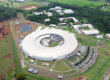
Internationally recognized, CNPEM houses one of the most complete research ecosystems in the country, including laboratories for biosciences, nanotechnology, advanced materials, and Sirius, a particle accelerator – one of the most sophisticated scientific instruments in the world – that allows for the investigation of molecular structures with a high degree of precision and supports critical stages in the development of new drugs.
In addition to laboratory infrastructure, the Competence Center will feature a collaborative network involving pharmaceutical companies, startups, universities, research institutions, and national and international partners, creating an environment geared toward open innovation and technology transfer to the productive sector.
Development of specialists for a strategic sector
Another pillar of the Competence Center’s activities will be the training of highly qualified human resources to work in areas considered critical to the future of the Brazilian pharmaceutical industry.
The program foresees the training of researchers, industry professionals, and students in competencies related to drug discovery, medicinal chemistry, biotechnology, pharmaceutical development, production scale-up, and technology transfer. The expectation is to contribute to reducing one of the main bottlenecks in the sector: the shortage of specialists in the development of innovative medicines.
Over a decade of partnership with Embrapii
The announcement of the new Competence Center reinforces a partnership built over more than a decade between CNPEM and the Brazilian Company for Industrial Research and Innovation (Embrapii). Accredited as an Embrapii Unit since 2014, CNPEM develops research, development, and innovation projects in partnership with companies in the fields of industrial biotechnology and biotechnology applied to health. The selection of the institution to host the new Competence Center represents a new milestone in this journey of collaboration.
This work was also presented during Embrapii Experience Biotechnology, an event held in partnership with Sindusfarma on July 1 and 2 in São Paulo and Campinas. The event brought together companies, research institutions, and representatives of the innovation ecosystem to foster connections, showcase technological capabilities, and stimulate new partnerships in research, development, and innovation.
In Campinas, the program included technical visits to Sirius and the Brazilian Biosciences National Laboratory (LNBio), allowing participants to see part of the scientific infrastructure that supports the development of strategic technologies for industry and healthcare.
Over the course of these more than ten years, we have built a relationship based on trust and collaboration with companies to transform scientific knowledge into innovation. The creation of the Competence Center represents an evolution of this trajectory. “Initiatives such as the Embrapii Experience bring the productive sector even closer to the expertise and infrastructure available at CNPEM, creating opportunities for new partnerships and the development of technologies of strategic importance to the country”, says Claudia Caparelli, CNPEM Innovation Manager and responsible for the institution’s Embrapii Unit.
About Embrapii Competence Centers
Embrapii Competence Centers aim to conduct high-impact research and prepare talent to lead the industry of the future. This network brings together centers of excellence with proven technical and scientific capabilities, highly qualified human capital, and state-of-the-art infrastructure operating at the frontier of knowledge— strategic areas that still require intensive research to generate new competencies and support the country’s industrial development.
In addition to cutting-edge research, the Centers are major drivers of deep tech startups, accelerating new business models and bringing innovative solutions from scientific research to the market. A unique ecosystem that connects science, technology, and industry to transform challenges into opportunities for Brazil.
Sobre o CNPEM
O Centro Nacional de Pesquisa em Energia e Materiais (CNPEM) abriga um ambiente científico de fronteira, multiusuário e multidisciplinar, com ações em diferentes frentes do Sistema Nacional de CT&I. Organização Social supervisionada pelo Ministério da Ciência, Tecnologia e Inovação (MCTI), com interveniência do Ministério da Educação e do Ministério da Saúde, o CNPEM é impulsionado por pesquisas que impactam as áreas de saúde, energia, materiais renováveis e sustentabilidade. Responsável pelo Sirius, maior equipamento científico já construído no País. O CNPEM hoje desenvolve o projeto Orion, complexo laboratorial para pesquisas avançadas em patógenos. Equipes altamente especializadas em ciência e engenharia, infraestruturas sofisticadas abertas à comunidade científica, linhas estratégicas de investigação, projetos inovadores com o setor produtivo e formação de pesquisadores e estudantes compõem os pilares da atuação deste centro único no País, capaz de atuar como ponte entre conhecimento e inovação. As atividades de pesquisa e desenvolvimento do CNPEM são realizadas por seus Laboratórios Nacionais de: Luz Síncrotron (LNLS), Biociências (LNBio), Nanotecnologia (LNNano) e Biorrenováveis (LNBR), além de sua unidade de Tecnologia (DAT) e da Ilum Escola de Ciência, curso de bacharelado em Ciência e Tecnologia.