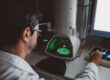
Jean Rodrigo Santos, pharmacist and master’s student at the Brazilian Biosciences National Laboratory (LNBio) of the Brazilian Center for Research in Energy and Materials (CNPEM), received the “SBBq 2026 Best Poster Award” during the 55th Annual Meeting of the Brazilian Society for Biochemistry and Molecular Biology (SBBq), held between May 16 and 19, 2026, in Águas de Lindóia (SP).
The award was given to the poster “Targeting the ubiquitination machinery: Discovery of novel UBE2A modulators through High-Throughput Screening”, selected from approximately 800 works presented at the event. This work was developed in collaboration with Isabelly Gonçalves Messias, Raphael Meneghello, Thais Hancio Pereira, Danieli Cristina Gonçalves, Daniela Barretto Barbosa Trivella, Maria Augusta Arruda, Gustavo Fernando Mercaldi, and Ivan Rosa e Silva.

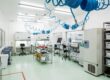
This research is part of the master’s project “Identification and characterization of UBE2A enzyme modulators by high-throughput automated screening”. The study aimed to identify new modulators of the UBE2A enzyme, involved in cellular processes related to cancer and neurodevelopmental diseases. To this end, a biochemical assay based on fluorescence polarization was developed and a high-throughput automated screening was performed with approximately 20,000 compounds, allowing the identification of molecules with potential application in biological studies and in the development of new drugs.
The study is currently funded by FAPESP (Process No. 24/07830-3), and is part of the institutional project “Discovery of bioactive compounds for neurodevelopmental disorders”, funded by the Brazilian Ministry of Health under PRONAS/PCD.
According to Jean Rodrigo Santos, this recognition reinforces the importance of the collaborative work developed at LNBio/CNPEM and the scientific training initiatives promoted by CNPEM.
About LNBio
The Brazilian Biosciences National Laboratory (LNBio) is dedicated to the study of human health, combining integrative biology with advanced technologies. With competencies in gene editing, microphysiological systems, bioimaging, and tissue engineering, LNBio works to discover molecular targets and develop innovative therapies for illnesses that are of public importance. This broad approach, which includes molecules and living organisms, unravels molecular mechanisms to identify bioactive compounds that are essential to develop new active pharmaceutical ingredients. LNBio concentrates its efforts on demands from the public health system, using state-of-the-art infrastructure and a matrix work model to promote innovation and development at the crossroads between science and health. To integrate health with socioeconomic and environmental factors, LNBio serves as a scientific platform that is available to the government, able to develop advanced technologies that respond to strategic issues. LNBio is part of the Brazilian Center for Research in Energy and Materials (CNPEM) in Campinas, São Paulo, a private, non-profit organization overseen by the Ministry of Science, Technology, and Innovation (MCTI).
About CNPEM
The Brazilian Center for Research in Energy and Materials (CNPEM) is home to a state-of-the-art, multi-user and multidisciplinary scientific environment and works on different fronts within the Brazilian National System for Science, Technology and Innovation. A social organization overseen by the Ministry of Science, Technology and Innovation (MCTI), with the involvement of the Ministry of Education and the Ministry of Health, CNPEM is driven by research that impacts the areas of health, energy, renewable materials, and sustainability. It is responsible for Sirius, the largest assembly of scientific equipment constructed in the country, and is currently constructing Project Orion, a laboratory complex for advanced pathogen research. Highly specialized science and engineering teams, sophisticated infrastructure open to the scientific community, strategic lines of investigation, innovative projects involving the productive sector, and training for researchers and students are the pillars of this institution that is unique in Brazil and able to serve as a bridge between knowledge and innovation. CNPEM's research and development activities are carried out through its four National Laboratories: Synchrotron Light (LNLS), Biosciences (LNBio), Nanotechnology (LNNano), Biorenewables (LNBR), as well as its Technology Unit (DAT) and the Ilum School of Science — an undergraduate program in Science and Technology.