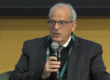
Gabriel Pereira Xavier, a member of the first class to graduate the Ilum School of Science, the undergraduate degree program offered by the Brazilian National Center for Research in Energy and Materials (CNPEM), received the Excellent Talk Award at the 2026 APS Global Physics Summit, one of the most important international events in the field of physics. Gabriel, who is currently pursuing his doctorate at the Institute of Physics at the University of São Paulo (USP), was recognized for his presentation describing his work in the area of computational simulation of materials.

The Global Summit is held by the American Physical Society (APS) with the presence of thousands of researchers from around the world, and is recognized as one of the most prestigious events in the field. This year’s summit combined different traditional meetings of this group, further expanding both the reach and the scientific importance of the event.
The award was granted by Cell Press’s journal Newton in recognition of the quality of Gabriel’s oral presentation, a format used for most of the event’s scientific contributions.
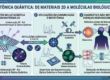
His work lies within the field of computational simulation of crystalline materials, with a focus on single-layer perovskites, a topic which has stirred interest for its potential applications in optoelectronics. Using density functional theory, a computational approach to model the properties of materials based on their atomic structure, Gabriel’s research investigated the stability, mechanical properties and electronic characteristics of these structures.
“Using atomic configuration, we were able to obtain results comparable with experiments and even predict the properties of materials that have not yet been synthesized,” he explained.
The findings of his study included determining which compositions are stable and which are not, important information for experimental research. “For example, we can determine which materials have greater potential for application and which are less likely to be viable in practice,” he added.
The research is part of Gabriel’s doctoral research, which explores the properties of low-dimensional materials, an area that is expanding in the fields of physics and materials science.
An Ilum education as the foundation for a scientific trajectory
Gabriel was a member of Ilum’s first graduating class, and he stressed the importance of the interdisciplinary training he received there for his subsequent academic and scientific trajectory.
“The foundations we received at Ilum were extremely important, in terms of content as well as connections. In fact, it was through this environment that I met my PhD advisor.”
He added that training in science and technology contributed to an integrated vision of research, facilitating dialog between different knowledge areas.
“Ilum provides very solid support for us to work amid complex topics. Even in such a demanding area as physics, this training was very helpful in adaptation and carrying out research.”
Gabriel also highlighted the impact of his academic experience beyond technical aspects: “I am very grateful for the education I got at Ilum, not only as a researcher but also as a person,” he added.
About the Ilum School of Science
Ilum offers a free undergraduate degree program that utilizes an interdisciplinary approach to train scientists and professionals in science and technology. With an innovative educational model, the three-year full-time bachelor program offers courses that connect life sciences, materials science, data science, artificial intelligence, and the humanities in order to prepare researchers to work in an ethical and collaborative manner in the search for solutions to the global challenges of the twenty-first century. The Ilum School of Science is funded by the Brazilian Ministry of Education (MEC) and is part of the Brazilian Center for Research in Energy and Materials (CNPEM) in Campinas, São Paulo, a social organization overseen by the Ministry of Science, Technology, and Innovation (MCTI). Ilum's educational mission offers early contact with experimental activities, in teaching labs at the school as well as at CNPEM, in projects carried out together with researchers.
About CNPEM
The Brazilian Center for Research in Energy and Materials (CNPEM) is home to a state-of-the-art, multi-user and multidisciplinary scientific environment and works on different fronts within the Brazilian National System for Science, Technology and Innovation. A social organization overseen by the Ministry of Science, Technology and Innovation (MCTI), CNPEM is driven by research that impacts the areas of health, energy, renewable materials, and sustainability. It is responsible for Sirius, the largest assembly of scientific equipment constructed in the country, and is currently constructing Project Orion, a laboratory complex for advanced pathogen research. Highly specialized science and engineering teams, sophisticated infrastructure open to the scientific community, strategic lines of investigation, innovative projects involving the productive sector, and training for researchers and students are the pillars of this institution that is unique in Brazil and able to serve as a bridge between knowledge and innovation. CNPEM’s research and development activities are carried out through its four National Laboratories: Synchrotron Light (LNLS), Biosciences (LNBio), Nanotechnology (LNNano), Biorenewables (LNBR), as well as its Technology Unit (DAT) and the Ilum School of Science — an undergraduate program in Science and Technology supported by the Ministry of Education (MEC).