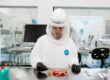
Infrastructure at the Brazilian Biorenewables National Laboratory (LNBR) offers free access for academic researchers to conduct metagenomics, metatranscriptomics and metabolomics studies
The Brazilian Center for Research in Energy and Materials (CNPEM) will accept research proposals from external academic users interested in accessing its Multi-omics Facility between July 1 and September 30, 2026. The facility is operated by the Brazilian Biorenewables National Laboratory (LNBR).
The facility provides access to state-of-the-art instrumentation and specialized technical support for projects requiring metagenomics, metatranscriptomics, and metabolomics analyses, enabling studies on the composition, activity, and functioning of complex biological systems. Approved projects will be carried out between January and June 2027.
Access is free of charge for researchers affiliated with academic institutions, subject to approval of the submitted proposal. The selection process considers scientific merit, technical feasibility, and compliance with safety requirements.
Schedule
Proposal submission: July 1 to September 30, 2026
Project execution: January 4 to June 30, 2027
Proposal submission and selection
Proposals must be submitted exclusively through the SAU Online system. In addition to scientific merit, technical feasibility, and safety criteria, approved proposals may be eligible for financial support, in accordance with the regulations for external users.
The Multi-omics Facility
The Multi-omics Facility comprises the SEQ – High-throughput Nucleic Acid Sequencing and MET – Metabolomics laboratory units.
The SEQ unit provides access to state-of-the-art instruments for high-throughput nucleic acid (DNA/RNA) sequencing, offering both short-read and long-read sequencing approaches.
The MET unit is dedicated to metabolite analysis in complex biological samples using mass spectrometry coupled with liquid or gas chromatography. Metabolomics provides a comprehensive view of organismal metabolism through the comparative analysis of metabolic profiles across individuals and/or populations under different genetic, environmental, or pathological conditions.
Both laboratory units are staffed by highly qualified technical teams, providing comprehensive support from experimental design to final data analysis, ensuring scientific rigor and excellence in research outcomes.
Instruments available under this call
SEQ Unit
- Illumina MiSeq and NextSeq 2000 (second-generation – short-read sequencing);
- PacBio Sequel IIe;
- Oxford Nanopore MinION Mk1B (fourth-generation – long-read sequencing).
SEQ contact: Douglas Paixão – ngs@lnbr.cnpem.br
Important: Applicants are encouraged to contact the facility coordination before submitting their proposals to discuss the required consumables and reagents.
MET Laboratory Unit – Metabolomics
- LC-MS/MS – Waters Synapt XS (Q-IM-ToF): untargeted approach with relative quantification and metabolite annotation;
- GC-MS/MS – Agilent 7010C (QqQ): untargeted approach focused on the identification of volatile and lipid metabolites;
- GC-FID – Agilent 8890A: targeted approach for the quantification of fatty acids, hydrocarbons, and monomeric aromatic compounds.
MET contact: Naiara Sampaio – metabolomica@lnbr.cnpem.br
About CNPEM
The Brazilian Center for Research in Energy and Materials (CNPEM) is home to a state-of-the-art, multi-user and multidisciplinary scientific environment and works on different fronts within the Brazilian National System for Science, Technology and Innovation. A social organization overseen by the Ministry of Science, Technology and Innovation (MCTI), with the involvement of the Ministry of Education and the Ministry of Health, CNPEM is driven by research that impacts the areas of health, energy, renewable materials, and sustainability. It is responsible for Sirius, the largest assembly of scientific equipment constructed in the country, and is currently constructing Project Orion, a laboratory complex for advanced pathogen research. Highly specialized science and engineering teams, sophisticated infrastructure open to the scientific community, strategic lines of investigation, innovative projects involving the productive sector, and training for researchers and students are the pillars of this institution that is unique in Brazil and able to serve as a bridge between knowledge and innovation. CNPEM's research and development activities are carried out through its four National Laboratories: Synchrotron Light (LNLS), Biosciences (LNBio), Nanotechnology (LNNano), Biorenewables (LNBR), as well as its Technology Unit (DAT) and the Ilum School of Science — an undergraduate program in Science and Technology.