Together, these initiatives reinforce CNPEM’s efforts to democratize access to science and foster diversity within the scientific environment.
The Brazilian Center for Research in Energy and Materials (CNPEM), located in Campinas, São Paulo, began 2026 with three strategic programs aimed at training new talent and strengthening diversity in Brazilian science. The Sirius School for High School Teachers (ESPEM), the Summer Scholarship Program (PBV), and participation in the national Future Scientists program enhance CNPEM’s role in science education and public engagement.

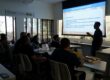
Participants of the Sirius School for High School Teachers (ESPEM) during an activity.
The programs offer opportunities for teachers and students from different regions of Brazil and Latin America, with special attention to the inclusion of women, young people from remote areas, and members of historically underrepresented communities, such as Indigenous and Quilombola populations.
These initiatives are part of CNPEM’s institutional policy to bring society closer to its cutting-edge research, which impacts areas such as health, energy, renewable materials, and sustainability. CNPEM is one of the most advanced research centers in Latin America, hosting state-of-the-art scientific infrastructures such as Sirius, one of the world’s few fourth-generation synchrotron light sources. The center is also implementing the Orion complex for pathogen research, which will house Latin America’s first maximum biosafety (BSL-4) laboratory and the first in the world connected to a synchrotron light source, Sirius.
Teacher training
The 8th edition of the Sirius School for High School Teachers (ESPEM) was held from January 12 to 17, 2026, bringing together Physics, Chemistry, and Biology teachers from public and private school systems across Brazil. The program is organized by CNPEM with support from the Brazilian Physical Society (SBF).
Participants attended theoretical and practical classes with CNPEM researchers, lectures by invited experts, and visits to the national laboratories that make up the center, including Sirius. The goal is for teachers to gain first-hand knowledge of areas such as synchrotron light science, biosciences, nanotechnology, engineering, and biorenewables, as well as the undergraduate program in Science and Technology offered by Ilum School of Science.
In addition to technical content, ESPEM also serves as a space for exchanging pedagogical experiences, strengthening networks among educators from diverse regional and social contexts. The expectation is that the program’s impact will multiply in classrooms, reaching thousands of students and stimulating interest in science.
Latin American integration
In 2026, the Summer Scholarship Program (PBV) reached its 33rd edition, consolidating its role as one of the main entry points for undergraduate students into CNPEM’s research environment. Held from January 7 to February 27, the program received 1,089 applications from candidates from 26 of Brazil’s 27 states, as well as from nine countries in Latin America and the Caribbean.
In this edition, 28 undergraduate students were selected from 15 Brazilian states and three countries (Ecuador, Colombia, and Chile). Participants are developing 22 multidisciplinary and interdisciplinary research projects distributed across CNPEM’s four national laboratories: LNLS (4 projects), LNBio (9), LNNano (6), and LNBR (3).
Regional diversity is a highlight of the program: 10 students came from Brazil’s Northeast, 6 from the Southeast, 5 from the South, 1 from the North, and 1 from the Central-West, in addition to the international participants. The PBV aims to provide an intensive research experience under the direct supervision of CNPEM researchers.
Future Scientists
Since 2023, CNPEM has also been part of the national Future Scientists program, which aims to encourage girls from public high schools to explore careers in science, technology, engineering, and mathematics (STEM). In 2026, 16 students from the state of São Paulo took part in activities developed in partnership with the center.
Created in 2012 by Cetene (Center for Strategic Technologies of the Northeast) and expanded nationwide in 2023, the program has shown positive results, with around 70% of participants enrolling in higher education—indicating a direct impact on the development of long-term academic and professional trajectories.
About CNPEM
The Brazilian Center for Research in Energy and Materials (CNPEM) is home to a state-of-the-art, multi-user and multidisciplinary scientific environment and works on different fronts within the Brazilian National System for Science, Technology and Innovation. A social organization overseen by the Ministry of Science, Technology and Innovation (MCTI), CNPEM is driven by research that impacts the areas of health, energy, renewable materials, and sustainability. It is responsible for Sirius, the largest assembly of scientific equipment constructed in the country, and is currently constructing Project Orion, a laboratory complex for advanced pathogen research. Highly specialized science and engineering teams, sophisticated infrastructure open to the scientific community, strategic lines of investigation, innovative projects involving the productive sector, and training for researchers and students are the pillars of this institution that is unique in Brazil and able to serve as a bridge between knowledge and innovation. CNPEM’s research and development activities are carried out through its four National Laboratories: Synchrotron Light (LNLS), Biosciences (LNBio), Nanotechnology (LNNano), Biorenewables (LNBR), as well as its Technology Unit (DAT) and the Ilum School of Science — an undergraduate program in Science and Technology supported by the Ministry of Education (MEC).