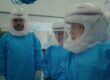
Training prepares professionals to work in BSL-3 environments, strengthening the technical foundation for Orion’s future operations

Caption: Training involves theoretical and practical sessions in a simulation laboratory designed as a faithful replica of the facilities that characterize BSL-3 and BSL-4 environments (Credits: Disclosure/CNPEM)
Butantan Institute staff took part, between November 2025 and February 2026, in three training courses in Biosafety Level 3 (BSL-3) laboratories, held at the training laboratory of the Brazilian Center for Research in Energy and Materials (CNPEM) in Campinas (SP). In total, 24 collaborators from the Butantan Institute were trained.
This initiative is part of the CNPEM BSL-3 Biosafety Training and Capacity Building Program. The program will be expanded to include biosafety training in BSL-4 laboratories within the Orion project, which will house the first maximum-containment facilities in Latin America and will be the first in the world connected to a synchrotron light source, Sirius.
The program was designed as an essential step in preparing for Orion’s operation and was structured to strengthen the training of human resources capable of working in environments of high and maximum biological containment.
Butantan Institute staff training was conducted in a simulation laboratory designed as a faithful replica of the facilities that characterize BSL-3 and BSL-4 environments. The space allows researchers to realistically experience the operational routines and rigorous biosafety protocols required in these environments without handling infectious agents. Training sessions took place November 3–6, 2025; January 26—30, 2026; and February 9—12, 2026.
For participants, the unique aspect of the training lies in the practical experience and the insights exchanging with professionals who have already worked in BSL-3 laboratories. “This type of training, conducted by personnel who have actually worked in BSL-3, covers the practical aspects. You can read as many guidebooks as you want, but demonstrating in practice how to don protective gear, how to act in case of spills, and how to properly close the gown — only someone who has experienced BSL-3 can truly convey this”, says Mauricio Goldfeder, Butantan’s Process Development Coordinator.
The training was also highlighted as strategic for strengthening national capacity. “We’ve always had to look for these kinds of courses abroad. Having this here is wonderful. Many things that we previously needed to import are now being developed here, and this is very important so that, in times of crisis, we don’t become dependent on other countries”, points out Renata Gomes, laboratory technologist at the institution. “It is clear that there is a growing need for a course like this”, highlights Rafaella Mariano Lafraia, laboratory technician at the Institute.
The completion of these three training groups highlights the growing demand for specialized training in the country and reinforces the commitment of the involved institutions to the professional development of their teams. By promoting training even before the Orion project begins operations, CNPEM seeks to contribute to the consolidation of a national base of qualified professionals aligned with international best practices in biosafety.
The participation of the Butantan Institute in this process reinforces the collaboration between Brazilian scientific institutions in building strategic capacities for advancing research on pathogens and strengthening national scientific autonomy, especially in the face of contemporary public health challenges.
Project Orion
Project Orion will be a laboratory complex for advanced pathogen research, and will include Latin America’s first maximum biological containment level facilities (BSL-4), the only labs of this kind in the world connected to a synchrotron light source, Sirius. Currently under construction in the city of Campinas, São Paulo on the CNPEM campus, this project will combine analytic techniques and advanced competencies in bioimaging which will be open to the scientific community and public agencies. By permitting advances in knowledge on pathogens and related diseases, Orion will support health surveillance activities and policies, as well as the development of diagnostic methods, vaccines, treatments, and epidemiological strategies. Orion will support national sovereignty in facing health crises, and has the potential to benefit various areas such as health, science and technology, defense, and the environment. The implementation of Project Orion is overseen by the Brazilian Center for Research in Energy and Materials (CNPEM), a social organization linked to the Ministry of Science, Technology and Innovation (MCTI). The project is part of the federal government’s New Growth Acceleration Program (PAC) and funded with resources from the National Scientific and Technological Development Fund (FNDCT) and MCTI, with support from the Ministry of Health (MS). This initiative is part of the federal government’s New Industry Brazil (NIB) stimulus policy and will serve as an instrument of national sovereignty, competence, and security in the fields of science and technology for research, defense, and human, animal, and environmental health. Orion was also planned to strengthen the Health Economic-Industrial Complex (CEIS), an initiative coordinated by the Ministry of Health and intended to meet priority demands from the Brazilian Unified Health System (SUS).
About CNPEM
The Brazilian Center for Research in Energy and Materials (CNPEM) is home to a state-of-the-art, multi-user and multidisciplinary scientific environment and works on different fronts within the Brazilian National System for Science, Technology and Innovation. A social organization overseen by the Ministry of Science, Technology and Innovation (MCTI), CNPEM is driven by research that impacts the areas of health, energy, renewable materials, and sustainability. It is responsible for Sirius, the largest assembly of scientific equipment constructed in the country, and is currently constructing Project Orion, a laboratory complex for advanced pathogen research. Highly specialized science and engineering teams, sophisticated infrastructure open to the scientific community, strategic lines of investigation, innovative projects involving the productive sector, and training for researchers and students are the pillars of this institution that is unique in Brazil and able to serve as a bridge between knowledge and innovation. CNPEM’s research and development activities are carried out through its four National Laboratories: Synchrotron Light (LNLS), Biosciences (LNBio), Nanotechnology (LNNano), Biorenewables (LNBR), as well as its Technology Unit (DAT) and the Ilum School of Science — an undergraduate program in Science and Technology supported by the Ministry of Education (MEC).